
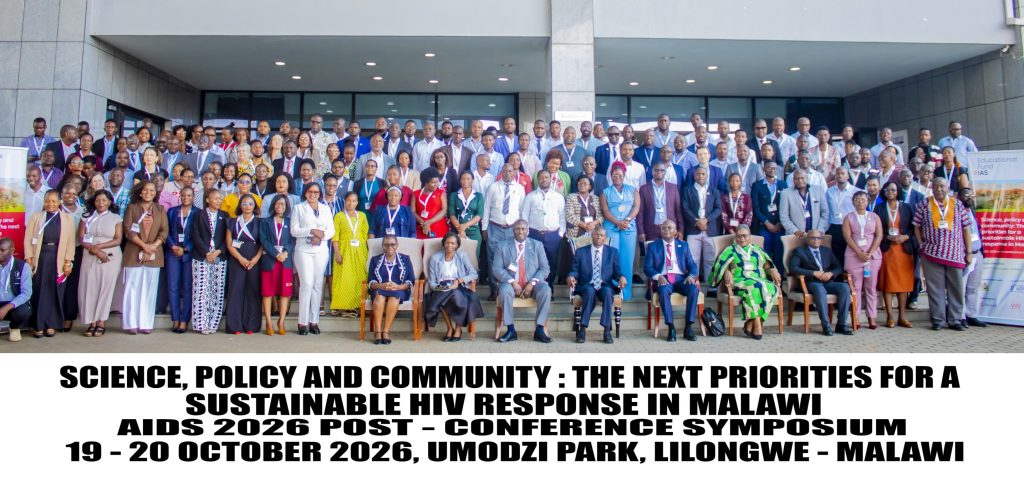
In the aftermath of the 2026 AIDS Conference held in Brazil, the International AIDS Society Educational Fund (IASEF), in partnership with Partners in Hope Malawi, organized a two-day post-conference symposium in Lilongwe to share key insights from the conference and to identify priorities for strengthening Malawi’s HIV response.
The meeting was held at the Bingu International Convention Centre (BICC) from 19th to 20th October 2026 under the theme “Science, Policy and Community: The Next Priorities for a Sustainable HIV Response in Malawi.
The symposium was graced by Mr. Bestone Chisamile, Principal Secretary in the Ministry of Health and Sanitation. In his remarks, the PS indicated that the meeting was timely to appreciate key outcomes from the AIDS conference which were key to defining the next course of action in the HIV response.
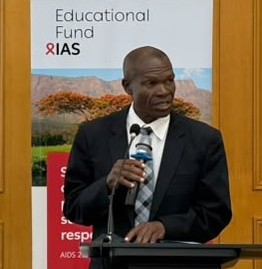
HIV response landscape is changing; the international support continues to shrink and as nation we have to device ways and means of supporting the response domestically.
This is a platform to bang heads and find sustainable solutions,” stated Mr. Chisamile.
The PS further reaffirmed the government’s commitment to ensuring that the country’s limited resources are utilized effectively to achieve the greatest possible impact.
As such, he stressed the importance of making strategic decisions about resource allocation to ensure that available funding supports interventions that deliver meaningful results in HIV prevention, treatment and care.
Taking his turn, President of the International AIDS Society (IAS) Professor Kenneth Ngure, emphasized the need to produce practical recommendations to guide Malawi’s next steps in addressing HIV response challenges.
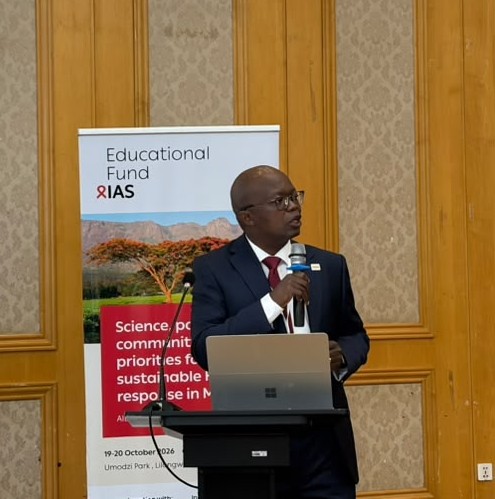
“My hope is that these discussions should culminate in an action plan outlining how the country can advance HIV prevention, treatment and care”, he hoped.
The symposium featured presentations on key developments in HIV prevention, including pre-exposure prophylaxis (PrEP) options both Oral and long-acting injectable cabotegravir (CAB-LA) and Lenacapavir (LEN).
Presenters also shared key lessons learned from the IAS conference, providing participants with an opportunity to reflect on how emerging scientific evidence could inform Malawi’s HIV response.
Several panel discussions further explored issues surrounding HIV prevention, treatment and care, allowing stakeholders to exchange perspectives and consider approaches to translating scientific evidence into policy and practice.
Moderating the meeting, the Acting Chief Executive Officer of the National AIDS Commission (NAC), Ms. Tione Chilambe, highlighted the importance of sharing key insights and outcomes from the IAS conference, particularly with stakeholders who were unable to attend the international gathering.
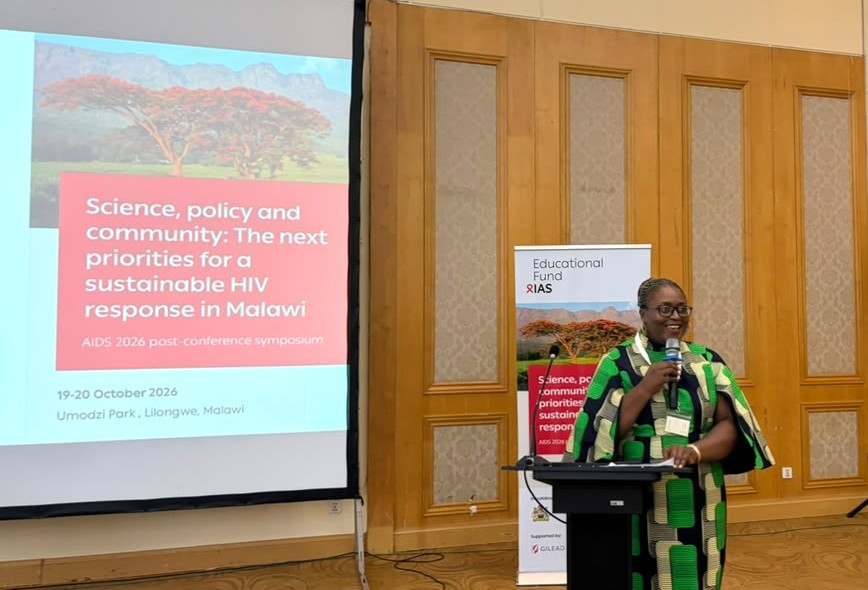
“This is symposium is timely and strategic because it provides an opportunity to exchange knowledge and experiences to strengthen collaboration and advance a sustainable HIV response in Malawi.It is my expectation that all key players will be charged to take necessary steps towards the HIV response” NAC Acting CEO echoed.
The 2026 AIDS Conference took place in Rio de Janeiro, Brazil under the theme: Rethink, Rebuild. Rise.